
The National Means-cum-Merit Scholarship (NMMS) is a premier scholarship opportunity for school-going students in India. It is aimed at the academically bright students from economically weaker sections, and the exam is an acknowledgement of sustained effort, solid knowledge and effective study techniques.
Your level of commitment and frequency of practice are definitely important, but a great NMMS book would be a big help on your study path. A carefully planned study resource assists students in grasping the concepts, doing the right amount of exercises and ultimately gaining the confidence to face the exam.
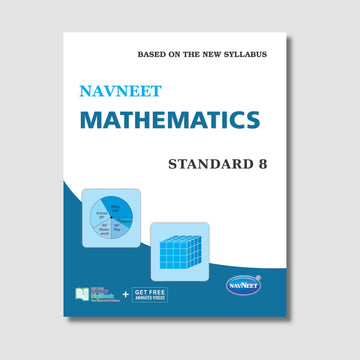
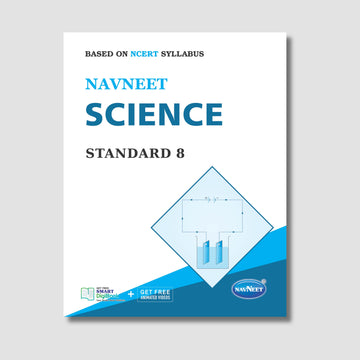
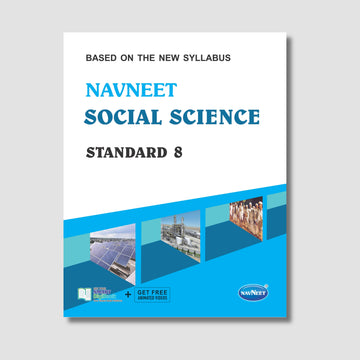
What Is the NMMS Exam?
The National Means-cum-Merit Scholarship (NMMS) is the government of India’s initiative for awarding scholarships confirmed by the Ministry of Education. It is a joint effort of the State Councils of Educational Research and Training (SCERTs) in different States and Union Territories. Here’s a quick overview:
| •Eligibility: 8th-grade students in government, government-aided, or local body schools |
| •Scholarship amount: ₹12,000 annually (₹1,000 monthly) for classes 9 to 12 |
| •Total scholarships: Nearly 1,00,000 scholarships are given yearly all over India |
| •Family income limit: Total household income should not exceed ₹3,50,000 per annum |
| •Minimum academic requirement: 55% marks in 7th class (50% for SC/ST/PwD candidates) |
| •Students in private schools: Not eligible — only government and government-aided school students may apply |
This scholarship amount is credited straight into the student’s bank account, greatly lowering the financial load and supporting the continuation of education of excellent students beyond Class 8.
NMMS Exam Pattern: What You’re Up Against
The NMMS exam is split into two papers, both happening on the same day:
Each paper contains only multiple-choice questions (MCQs), with four options each. There is no negative marking, so trying every question is always beneficial.
General and SEBC category students need at least 40% aggregate across MAT and SAT for qualification, whereas the minimum requirement for SC/ST/PH candidates is 32%.
Understanding the Two Papers
Paper 1: Mental Ability Test (MAT)
The MAT is designed to evaluate your logical reasoning and thinking skills. It features various question formats like:
| •Analogy (discovering relationships between pairs of words or numbers) |
| •Classification (finding the odd one out in a group) |
| •Numerical series (predicting the next number in a sequence) |
| •Pattern perception (recognizing visual patterns) |
| •Hidden figures (identifying shapes hidden within complex diagrams) |
Many students get confused with the MAT, not because it is difficult, but because it demands a kind of thinking that most students have not experienced before. A comprehensive NMMS book should contain special MAT practice sets with hundreds of reasoning questions.
Paper 2: Scholastic Aptitude Test (SAT)
Based on the curriculum of Classes 7 and 8, the SAT assesses school subjects. Here is how the paper is divided:
| •Science: 35 questions — Physics, Chemistry, Biology from Class 7 and 8 syllabi |
| •Social Science: 35 questions — History, Geography, Civics/Political Science |
| •Mathematics: 20 questions — Arithmetic, Algebra, Geometry from Classes 7 and 8 |
The SAT focuses on the comprehension and application of concepts rather than rote memorisation. Students who have a good understanding of the concepts are more likely to perform well.
What Makes a Good NMMS Book?
Not all books on a shelf are worthy of your time. When deciding on an NMMS book, here are the qualities to look for:
Includes both MAT and SAT: A thorough NMMS book should not overlook either paper.
Match Class 7 and 8 syllabus: The subjects must be in line with the NCERT and state board curricula for Classes 7 and 8.
Ample practice questions: A book with MCQs, full-length mock tests, and previous years’ question papers in a chapter-wise manner is desirable.
Understandable solutions: Guide answers should clarify why a certain choice is correct, not simply state it.
MAT-targeted reasoning tasks: Exclusive exercises in analogy, series, pattern recognition and hidden figures.
Latest material: Since exam patterns and question types keep changing, it is advisable to purchase the most recent edition.
Educational books from Navneet fulfill all these criteria, which is why, for years, they have been the most trusted study resource for Maharashtra students preparing for all types of competitive and board exams.
Why Navneet for NMMS Preparation?
Navneet Education Limited is one of the oldest and most reliable names in the field of school education publishing in India for 65 years. Students and parents prefer Navneet for these reasons:
Board-aligned expertise: Navneet is very well-informed about the structure of Indian school syllabi, which is very helpful for NMMS preparation.
Reliability through several generations: Navneet’s books have served as a source of guidance to students facing Board exams as well as competitive scholarships for many years. Parents who used to study with Navneet materials are now giving them to their children.
Comprehensive subject range: Navneet’s subject matter goes from Mathematics and Science to Social Studies and Language skills, covering every area of the NMMS syllabus.
Language that appeals to students: Navneet books are crafted in simple, clear English (and regional languages) so that students can get a real grasp of the material.
Exam-centric method: Practice MCQs, model answers, and systematic revision parts — all the components a student needs to achieve high scores in objective-type exams like NMMS.
Browse the complete Navneet educational book range on the Navneet Store.
Browse All Navneet Educational BooksTrusted by millions of students across India — find the right book for every subject and standard. |
Subject-wise Preparation Guide for NMMS
Mathematics
Focus on: Number systems, fractions and decimals, algebra (equations and expressions), ratio and proportion, mensuration (area, perimeter, volume), basic geometry, and data handling. Work through every exercise in your Class 7 and 8 Maths textbook. Speed matters in the SAT — aim to solve Maths questions in under 1 minute each.
Science
Focus on: Cell structure and functions, crop production, microorganisms, conservation of plants and animals, force and pressure, friction, sound, light, chemical reactions, and the human body. Understand the concepts, especially from Physics and Chemistry, rather than memorizing definitions. Navneet’s subject guides are particularly helpful for building conceptual clarity in Science.
Social Science
Focus on: History topics from Class 7 and 8 (Delhi Sultanate, Mughal Empire, colonial India, 1857 revolt), Geography (resources, land use, agriculture, industries), and Civics (the Indian Constitution, government structure, law and social justice). Make concise notes for History and Geography — these two subjects together account for 35 out of 90 SAT marks.
Mental Ability (MAT)
This is the most practice-dependent section. Do at least 20–30 MAT questions every day in the months leading up to the exam. Cover all question types: analogies, classification, series, patterns, and hidden figures. Many students underestimate MAT — don’t be one of them.
Preparation Tips to Crack the NMMS Exam
|
||
|
||
|
||
|
||
|
||
|
||
|
||
|
||
|
Final Thoughts
Preparing for the NMMS examination requires dedication, practice, and access to reliable study material. Choosing the right NMMS book can help students strengthen concepts, improve problem-solving skills, and prepare strategically for the scholarship examination. Ready to strengthen your preparation journey? Browse Navneet’s full range of educational books on the Navneet Store.
FAQs About NMMS Scholarship Books
|
||
|
||
|
||
|
||
|