In this guide

01Amod or Anand: Which Sanskrit Digest Do You Need?

02Why Grammar Is the Core of Sanskrit Board Prep

03What’s Inside the Digest?

04Key Grammar Topics: Sandhi, Samasa, Vibhakti and More

05How to Use This Digest Through the Year

06FAQs

Sanskrit in the SSC Board year is a subject that rewards consistent, structured preparation more than almost any other. Grammar rules, verb forms, Sandhi, and Samasa don’t respond well to last-minute cramming — but students who work through them chapter by chapter, applying rules to actual textbook lessons, find them far more manageable than they first appear.

The Navneet Sanskrit Digest for Std 10 — available in two editions, Amod (100 marks) and Anand (50 marks) — is built for this systematic approach. Updated to the latest Maharashtra State Board कृतिपत्रिका format, it covers word meanings, literal translations, lesson-wise grammar, and board exam practice in one resource.
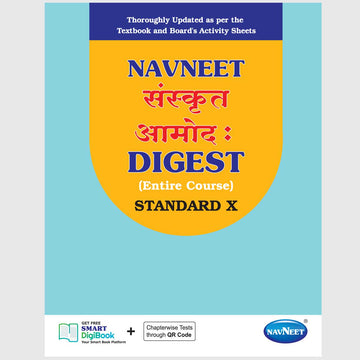
Navneet Sanskrit Amod Digest 100 marks Std 10 English Medium book cover

📚 Featured Book

Sanskrit Digest Amod (100 Marks) | Std 10
English Medium | Maharashtra Board

Word meanings, literal translations, lesson-wise grammar explanations, all स्वाध्यायक्रम answers, कृतियाँ aligned to the board भाषायामः section, and July 2025 कृतिपत्रिका practice included.

Literal Translations
Grammar Lesson-wise
Board कृतिपत्रिका

🛒 Buy on Navneet Store — ₹170


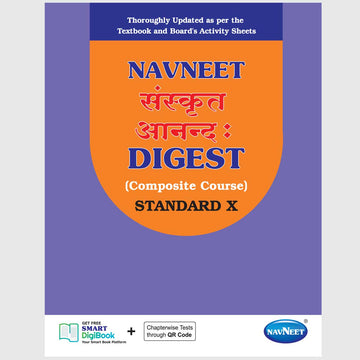
Navneet Sanskrit Anand Digest 50 marks Std 10 English Medium

📚 Navneet Digest

Sanskrit Digest Anand (50 Marks) | Std 10 | English Medium

For students taking Sanskrit as a second language (50-mark paper) — same lesson-wise grammar and translation approach, aligned to the 50-mark कृतिपत्रिका format.

🛒 Buy on Navneet Store — ₹105


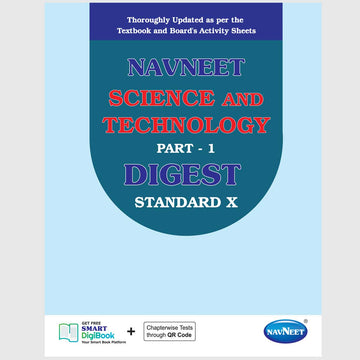
Navneet Science Technology Digest Part 1 Std 10 English Medium

📚 Navneet Digest

Science & Technology Digest Part 1 | Std 10 | English Medium

Physics and Chemistry with formula lists, worked numericals, and Board Activity Sheets for SSC board exams.

🛒 Buy on Navneet Store — ₹220

Amod or Anand: Which Sanskrit Digest Do You Need?

The most important question to settle before purchasing — and the most common source of confusion. The answer depends on which Sanskrit paper your school has opted for:

Amod Digest (E0546) Anand Digest (E0545)
For 100-mark Sanskrit paper (Sanskrit as first or main language) For 50-mark Sanskrit paper (Sanskrit as second language)
Follows the Amod Balbharati textbook Follows the Anand Balbharati textbook
₹170 | E0546 ₹105 | E0545

Check your school’s Sanskrit textbook cover — it will clearly say either Amod or Anand. Both digests follow the same structural approach (lesson-wise grammar, translations, कृतियाँ) adjusted for their respective syllabi and mark allocations.

Why Grammar Is the Core of Sanskrit Board Prep

Many students approach Sanskrit by memorising answers to likely questions. This works partially for prose comprehension questions — but it fails in the भाषायामः (grammar) section, which is a significant part of the कृतिपत्रिका. These questions require students to apply grammar rules to new sentences, not reproduce memorised answers.

The Navneet Sanskrit Digest addresses this by treating grammar as part of each lesson, not a separate module to be studied at the end of the year. When students encounter Sandhi, Samasa, or Vibhakti in the context of the actual textbook lesson where it appears, they understand how and why the rule applies — which is the understanding needed to handle new sentence variations in the exam.

What’s Inside the Digest?

Feature What It Does for Students
Meanings of difficult words Accurate शब्दार्थ for all prose and poetry lessons — a direct mark source in every paper
Literal translations Word-for-word translations of all prose and poetry, plus prose order of verses for Shloka-based content
Lesson-wise grammar explanations Grammar points relevant to each lesson explained in simple language — students learn rules in context, not in isolation
All स्वाध्यायक्रम answers Complete answers to all textbook exercises, structured the way the board expects them
भाषायामः कृतियाँ कृतियाँ framed exactly as per the board’s भाषायामः section — the grammar application part of the कृतिपत्रिका
लेखनकौशलम् guidance Special guidance for all writing skill कृतियाँ — the section most students find hardest to self-prepare
July 2025 कृतिपत्रिका Previous board कृतिपत्रिका with answer references for real exam-format practice

Key Grammar Topics: Sandhi, Samasa, Vibhakti and More

The following grammar areas form the backbone of the Sanskrit board paper and are covered systematically in the digest:

Sandhi (संधि): How words combine and change when joined. Understanding Sandhi allows students to split compound words and interpret Sanskrit sentences accurately — essential for translation questions.

Samasa (समास): Compound word formation. Identifying and splitting Samasa is a recurring question type in the board paper.

Vibhakti (विभक्ति): Noun cases and their usage within sentences. Mastery of Vibhakti improves both translation accuracy and grammatically correct answer writing.

Dhatu and Verb Forms (धातु): Verb roots and their conjugated forms across tenses and persons — the building block of sentence construction and translation.

Translation (अनुवाद): Accurate interpretation and rendering of Sanskrit passages — tested directly through passage-based questions and inline translation exercises.

Browse All Navneet Std 10 Maharashtra Board Books

Sanskrit, English, Science, Maths, History and more — all SSC digests on Navneet Store.

🛒 Shop Std 10 Books

How to Use This Digest Through the Year

1

Read the textbook lesson first, then use the digest: The digest supplements the Balbharati textbook — read the original lesson before opening the digest. This order ensures you understand what the grammar rules are explaining, not just the rule itself.

2

Revise शब्दार्थ in small batches: Rather than trying to learn all word meanings at once, cover 10–15 words per lesson spread across your weekly schedule. Distributed review builds retention far better than single-session cramming.

3

Write out translations rather than just reading them: For each lesson’s translation, attempt your own version before checking the digest. This is the single most effective practice for the translation questions in the board paper.

4

Don’t leave grammar for the last week: Sandhi, Samasa, and Vibhakti need repeated practice over time — they can’t be crammed in three days. A few minutes of grammar practice per chapter, chapter by chapter through the year, is far more effective.

5

Attempt the July 2025 कृतिपत्रिका under timed conditions: The included board question paper is the most realistic mock exam available. Sit through it with a timer, exactly as you would in the exam hall, before the final revision week.

Final Thoughts

Sanskrit is a subject where steady, systematic preparation over the academic year consistently outperforms last-minute revision. Students who work chapter by chapter — word meanings, translations, grammar in context — arrive at the board exam far better prepared than those relying on memorised answers. Get your copy of the Navneet Sanskrit Digest (Amod or Anand) from Navneet Store or your nearest authorised retail partner.

FAQs About Navneet Sanskrit Digest for 10th Standard

1. What is the difference between Sanskrit Amod and Sanskrit Anand?

Amod is the 100-mark Sanskrit paper for students taking Sanskrit as a main or first language. Anand is the 50-mark paper for students taking Sanskrit as a second language. Both follow different Balbharati textbooks — always check which your school uses.

2. Why is grammar so important in the Sanskrit board paper?

The भाषायामः section of the कृतिपत्रिका tests grammar application — Sandhi, Samasa, Vibhakti, and verb forms — on new sentences, not memorised answers. Students who understand the rules score reliably here; those who have only memorised answers cannot.

3. Does the digest cover literal translations for all lessons?

Yes — word-for-word translations of all prose and poetry lessons are included, along with prose order of verses for Shloka-based content, making translation questions practisable and predictable.

4. Is the Sanskrit digest updated for the 2026 SSC board exam?

Yes — Navneet updates its digests each year to match the current Balbharati textbook and board कृतिपत्रिका format. The July 2025 board paper is included with answer references for practice.

5. Can the digest be used for self-study without a tutor?

Yes — the lesson-wise structure means students can work independently through each chapter, checking their own translations and grammar answers against the digest’s model responses without needing external guidance.

6. Where can I buy the Navneet Sanskrit Digest for Std 10?

Both the Amod (₹170) and Anand (₹105) editions are available at Navneet Store online or your nearest authorised Navneet retail partner.

N N
Written and Reviewed by Navneet
Published June 15, 2026 7 min read

Privacy Preference Center