
Starting Class 9 comes with a new kind of pressure. The textbooks are thicker, the grammar rules are more precise, the maths covers more ground — and for the first time, students begin to sense that the foundations they build this year will directly shape how they handle the board exams ahead. Most students know they need to study harder. Very few know exactly what to study, how to study it, and which resources actually match the Maharashtra State Board syllabus.
This complete guide breaks down everything a Class 9 Maharashtra Board student needs — subject by subject, with the right books, strategies, and habits — so that the year becomes a head start on Class 10, not just a year to survive.
Why Std 9 Deserves More Attention Than Most Students Give It
Most parents and students treat Class 9 as a stepping stone — important, but not the real thing. That thinking is a mistake. Here’s why:
Class 9 Maths IS Class 10 Maths — just earlier: Algebra, geometry, and statistics concepts introduced in Std 9 feed directly into Class 10 Part I and Part II. Students who understand them well in Class 9 have a significant head start.
Science concepts compound: Physics, Chemistry, and Biology topics from Class 9 return — at a deeper level — in the Class 10 board paper. Weak foundations now mean more catch-up later.
Language habits form in Class 9: English answer structure, Hindi grammar patterns, and Marathi writing formats — if learned correctly now, these become automatic by the board exam year.
Internal assessment marks count: Class 9 carries internal assessment marks across subjects. Students who treat these as optional are leaving guaranteed marks on the table.
Std 9 Subjects: What You’re Actually Studying This Year
Maharashtra State Board students in Class 9 typically study the following subjects across two semesters:
The Complete Navneet Range for Std 9 — Book by Book
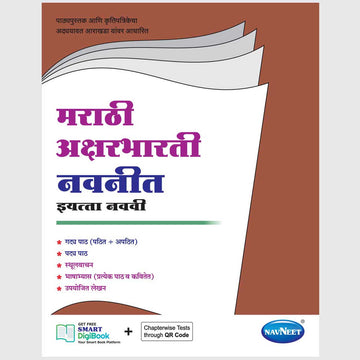
Navneet publishes a dedicated digest for every Std 9 subject. Each one is aligned to the current Balbharati textbook and the latest question paper pattern. Here’s the full set — click any title to buy directly from Navneet Store:
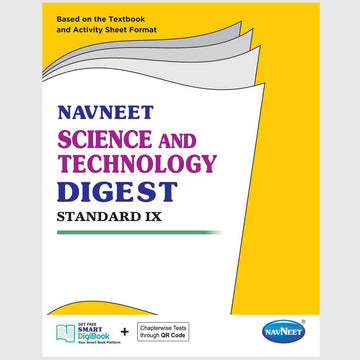
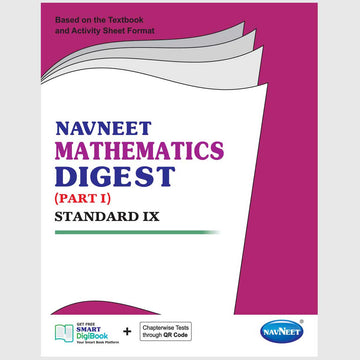

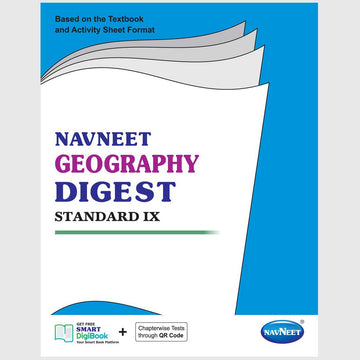
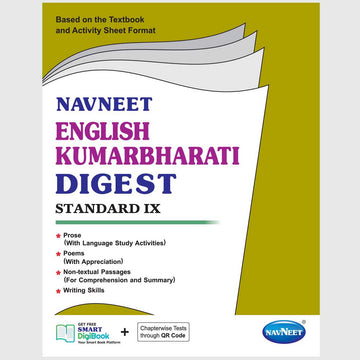
Browse the Full Navneet Std 9 CollectionSanskrit, Hindi, Vikas Practicals and more — all Std 9 titles in one place. |
Subject-wise Study Strategy for Class 9
Mathematics
Work every exercise in the textbook before opening the digest. Use the digest to check your working and identify where you made an error — not as a first source. For geometry, draw every diagram by hand. Aim to solve every problem in under 2 minutes by the end of the term.
Science & Technology
Understand concepts — don’t memorise definitions. For Physics, practise numerical problems regularly. For Biology, draw and label diagrams from memory. For Chemistry, balance every equation yourself before checking. Use the Science digest for model answers and memory maps.
History & Political Science
Read the chapter-wise summary first. Then read the textbook chapter. Then attempt Q&A from the digest. For long answers, always follow the structure: context → event/policy → impact. Don’t write everything you know — write what the question asks, in order.
Geography
Map and diagram questions are easy marks — practise them regularly. For conceptual chapters (endogenetic movements, precipitation), use the point-to-point summaries in the digest as your primary revision tool. Always learn the cause–effect relationship, not just the name of a process.
English (Kumarbharati)
The Warming Up and English Workshop sections carry real marks — don’t skip them. Practice poem appreciation in both points format and paragraph format. For Language Study activities, revise the topic explanation in the digest and then attempt the exercise without looking at the answers.
Marathi / Hindi
Applied writing (letters, essays, notices) is where most marks are lost or gained. Practise each format at least three times until the structure is instinctive. Grammar exercises should be done daily — 15 minutes in the morning before school is enough to build strong grammar habits over the term.
Sanskrit
Learn grammar lesson-by-lesson — not as an abstract separate topic. When you encounter a vibhakti or lakar form in a shloka, note it, understand it in context, and revisit it in the grammar section. CBQs reward application, not just memorisation. Attempt one CBQ per week.
Study Habits That Make Class 9 Work For You
|
||
|
||
|
||
|
||
|
Final Thoughts
Class 9 is an investment year. The students who take it seriously — who build their concepts, form their answer-writing habits, and use the right materials — come into Class 10 with a genuine advantage. Browse the full Navneet Std 9 Maharashtra Board collection on Navneet Store — subject-wise digests, Vikas practicals, and everything else a Class 9 student needs, delivered to your doorstep.
FAQs About Studying in 9th Standard Maharashtra Board
|
||
|
||
|
||
|
||
|